

Advanced Materials Analysis

Solving Complex
Material Problems

Advanced material analysis, formulation & deformulation, failure investigation, reverse engineering and R&D support for chemical, polymer and advanced-material companies.

Materials scientist working with an analytical laboratory instrument
01

Frame the material question before choosing the analytical pathway.

Problem-oriented services

What Can We Help You Solve?

Start with the material question. Select a service path designed to clarify the evidence needed for the next technical decision.

Why Xinbodi

Move from an observed material problem to a clearer technical question.

Complex material problems are rarely solved by a single data point. A useful investigation brings together the material context, the observed symptom and an analytical path that can support a decision.

01Problem-led framing

Start with the product and the problem, not a generic equipment list.

02Technical interpretation

Connect analytical observations to the next question worth testing.

03Confidential engagement

Discuss confidentiality requirements before sensitive details are shared.

Analytical capabilities

Methods selected to fit the material question.

Illustrative analytical pathways to discuss during project scoping. Actual method selection should be confirmed for each sample and objective.

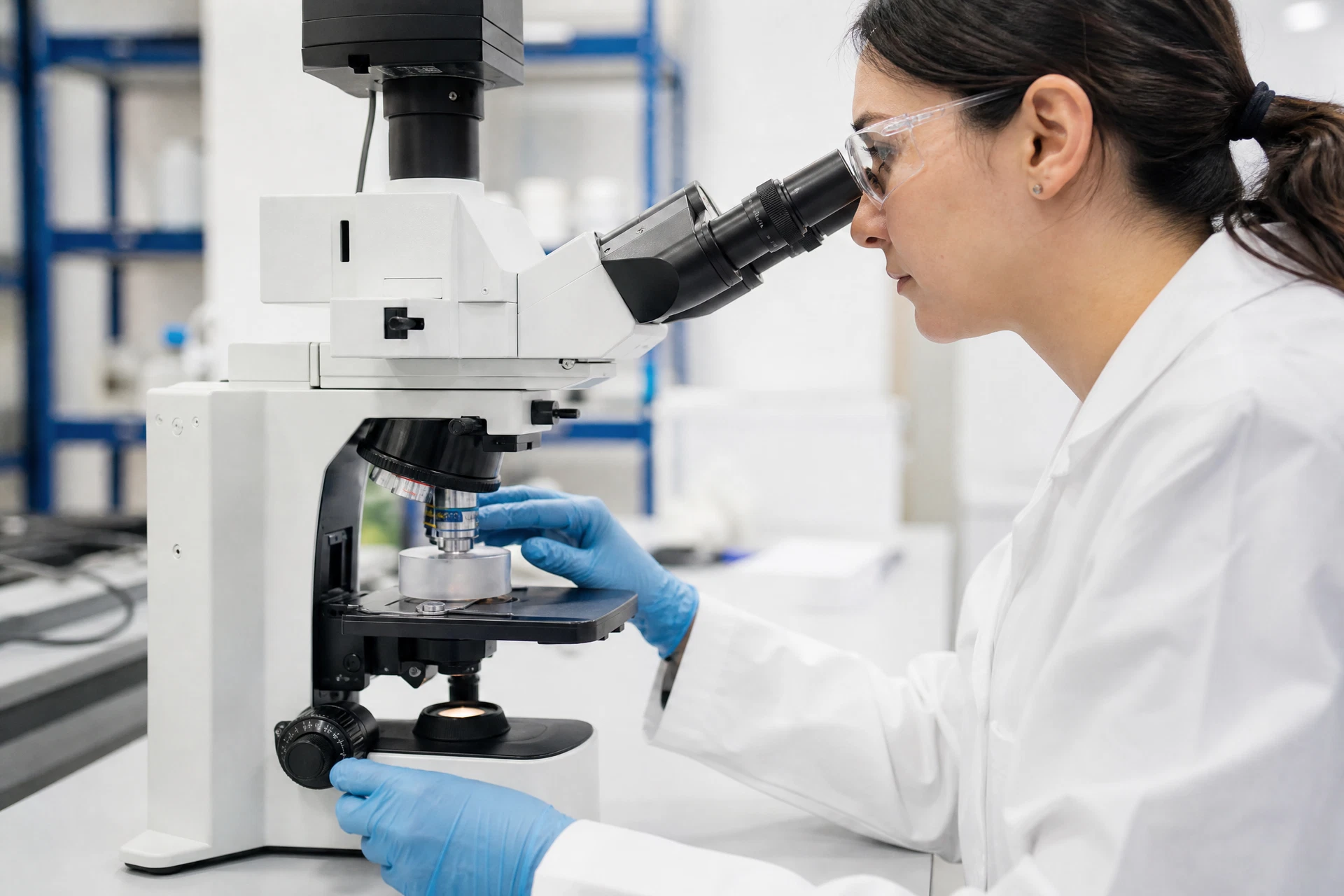
Scientist examining a sample with optical microscopy
01

Spectroscopy

FTIR · Raman · NMR · UV-Vis

02

Chromatography & Mass Spectrometry

GC-MS · LC-MS · GC · HPLC

03

Thermal Analysis

TGA · DSC · DMA

04

Microscopy & Surface Analysis

SEM · EDS · Optical microscopy

05

Structural & Elemental Analysis

XRD · ICP-MS · ICP-OES

Learn about Xinbodi

Industries we support

Technical questions are industry-specific.

Explore typical material questions across polymers, coatings, adhesives, chemicals, electronics, energy and medical materials.

Case studies

Real-world material problem solving.

Case study details, findings and recommendations are only published after review and verification.

Case 01

EVA Shoe Sole Yellowing Defect Analysis

A controlled footwear-material study linked recurring yellowing around an EVA midsole to an interaction between a foam-insole residue and a light-sensitive treatment chemical.

Problem Investigation Verified outcome
View case framework
Case 02

Unknown Polymer Material Analysis

A technical case analysis showing how FTIR, DSC, TGA and SEM/EDS can build an evidence chain for an unknown black polymer component.

Problem Investigation Verified outcome
View case framework
Case 03

Cracked Rubber Component Failure

A technical case analysis showing how mechanical, chemical, thermal and morphological evidence can be integrated for a cracked elastomeric component.

Problem Investigation Verified outcome
View case framework
Case 04

Comparative Engineering Plastics

A technical case analysis showing how mechanical, thermal and elemental evidence can frame a comparison between two engineering-plastic components.

Problem Investigation Verified outcome
View case framework
Case 05

Electronic Surface Residue Analysis

A technical case analysis showing how surface-sensitive methods can characterize unknown residue on an electronic component.

Problem Investigation Verified outcome
View case framework
Case 06

Battery Material Organic Component Characterization

A technical case analysis showing how thermal, spectroscopic and elemental evidence can characterize organic and inorganic components in a composite battery-related powder.

Problem Investigation Verified outcome
View case framework
Case 07

Chemical Formulation Reverse Engineering Analysis

A multi-technique investigation providing staged characterization of volatile, organic, functional and inorganic fractions in a complex chemical formulation.

Problem Investigation Verified outcome
View case framework

How it works

A clear path from problem to next step.

Start Your Analysis
01

Tell Us Your Problem

Describe the material, product, symptoms and the decision you need to make.

02

Send Your Sample

Share sample information and agree the appropriate submission pathway.

03

Analytical Investigation

Define a suitable investigation path for the technical question.

04

Receive the Report

Review the analytical evidence and its technical interpretation.

05

Next-Step Support

Decide whether additional testing or product-development support is useful.

Frequently asked questions

Questions about Xinbodi material analysis

Find concise answers before starting a technical conversation.

Xinbodi can help frame questions around unknown materials, composition differences, formulation, failure symptoms, residues, contamination and material-performance concerns. The appropriate scope depends on the sample, context and decision you need to support.

Request analysis

Have a difficult material problem?

Tell us what you are trying to identify, understand, investigate or improve. We will help frame the next analytical step.

Request Analysis